

From Idea to First Production · Guide 1 / 6
Before Your First Apparel Sample: How to Prepare Your Brand for Production
Learn how to prepare your clothing brand before contacting a manufacturer, including tech packs, quantities, materials, target pricing and a practical low-risk sampling process.
6 min read
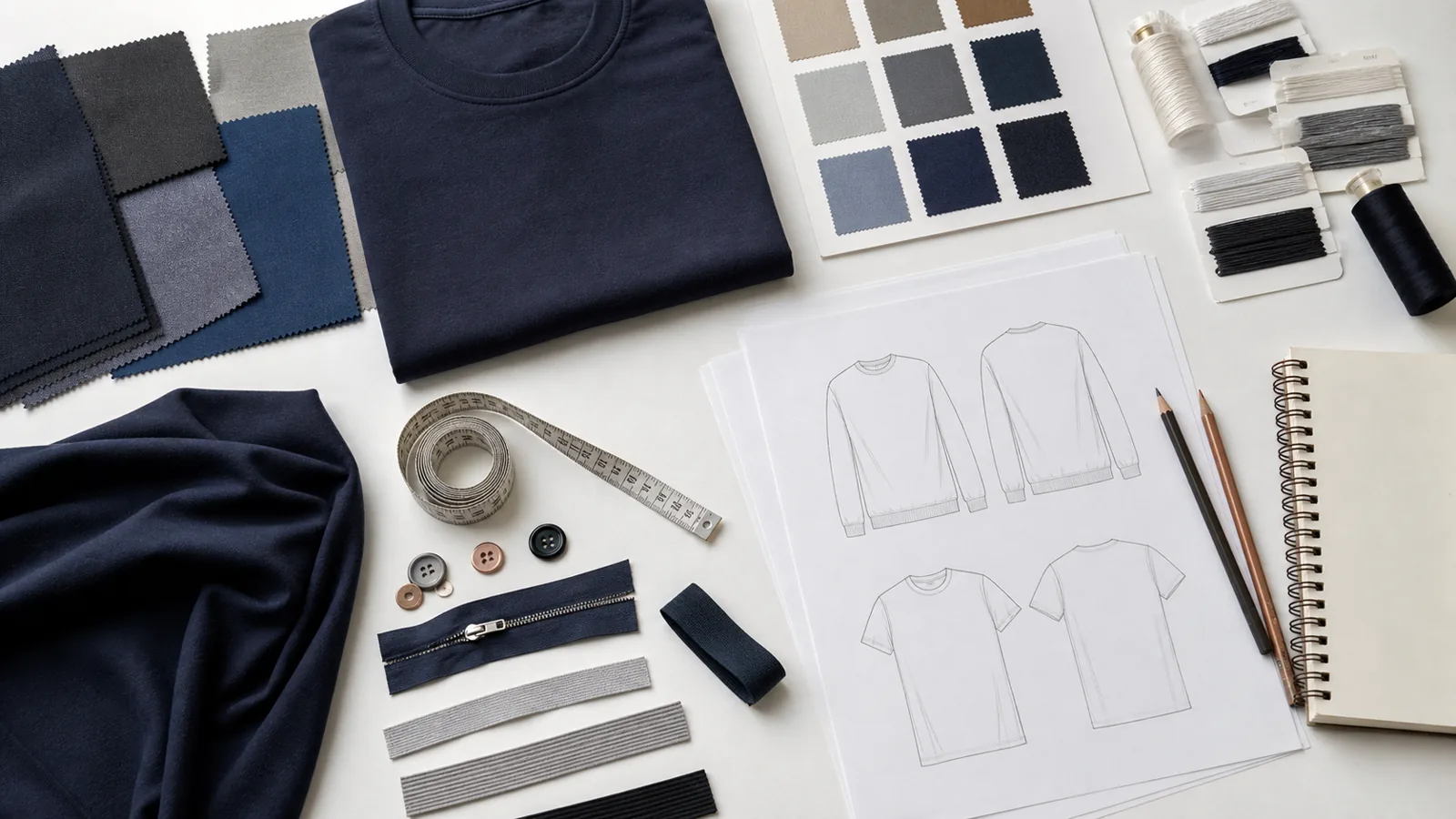
Starting a clothing brand does not begin with bulk production. It begins with turning an idea into a product brief that a manufacturing partner can understand, evaluate and develop.
New brands often want to begin with smaller quantities. This is reasonable: an untested collection carries commercial risk, and committing to large volumes too early may create unnecessary pressure on cash flow and inventory.
However, a lower opening quantity does not automatically make an inquiry less serious. What usually creates doubt is a request that lacks product details, quantity planning, material direction, target pricing or a clear next step.
Manufacturers and sourcing teams may receive many inquiries every day. A well-prepared brief makes it easier for them to understand your project, evaluate feasibility and give you a useful response.
What a Production Partner Needs to Understand
Before requesting a sample or quotation, you should be able to explain:
- What type of garments you want to produce
- Who the products are designed for
- Which market and price segment you are targeting
- How many styles, colors and sizes are planned
- Your estimated quantity per style and color
- Your preferred fabrics, trims and finishes
- Whether you have a tech pack or reference sample
- Your target delivery period
- The country where the products will be sold
- Your target price range, if available
Not every detail needs to be final. The objective is to provide enough structure for the production partner to identify what still needs to be developed.
Why a Tech Pack Matters
A tech pack converts a design concept into production information. It creates a shared technical reference for the brand, pattern team, sample room, material suppliers and production team.
A practical first tech pack may include:
- Technical front and back drawings
- Product description and construction details
- Measurement chart
- Fabric composition and expected fabric weight
- Color information
- Stitching and seam instructions
- Trims, buttons, zippers, elastics and drawcords
- Label and branding positions
- Print, embroidery or wash details
- Packaging requirements
- Reference images where necessary
A tech pack does not need to be perfect before the first conversation. It can develop during sampling. But sending only a fashion sketch or a general reference image usually leaves too many unanswered questions for accurate costing.
Clearer information reduces assumptions, unnecessary revisions and avoidable sampling costs.
Start With Materials Before Requesting a Full Sample
A complete garment sample is not always the most efficient first step.
If the fabric, color, trim or wash direction is still uncertain, beginning with material evaluation can be more practical. Depending on the project, this may involve:
- Fabric swatches
- Available quality cards
- Color options
- Buttons, zippers and snap samples
- Elastic and drawcord alternatives
- Label and packaging references
- Print or embroidery tests
- Denim wash or finishing references
Reviewing these elements first allows both sides to confirm the product direction before investing time and money in a complete development sample.
It also creates an early working rhythm. The brand can evaluate communication, responsiveness and sourcing ability, while the production partner can see how clearly decisions and feedback are managed.
Material samples, development work and shipping may involve charges. These should be discussed transparently before work begins.
How to Approach Lower Production Quantities
Smaller initial orders are possible in many situations, but feasibility depends on the product, material, construction, supplier minimums and production schedule.
A new brand can improve its chances by:
- Starting with fewer styles
- Limiting the number of colors
- Using available or stock-supported fabrics where suitable
- Avoiding highly customized trims in the first order
- Consolidating quantities around key products
- Keeping the size range commercially focused
- Allowing reasonable flexibility in material selection
- Budgeting separately for development and sampling
- Providing a realistic target price and timeline
For example, six styles in multiple colors may look like a small collection, but they can create many separate material, pattern and production requirements. Beginning with two well-developed products may produce a stronger result with less risk.
Build the Product in Stages
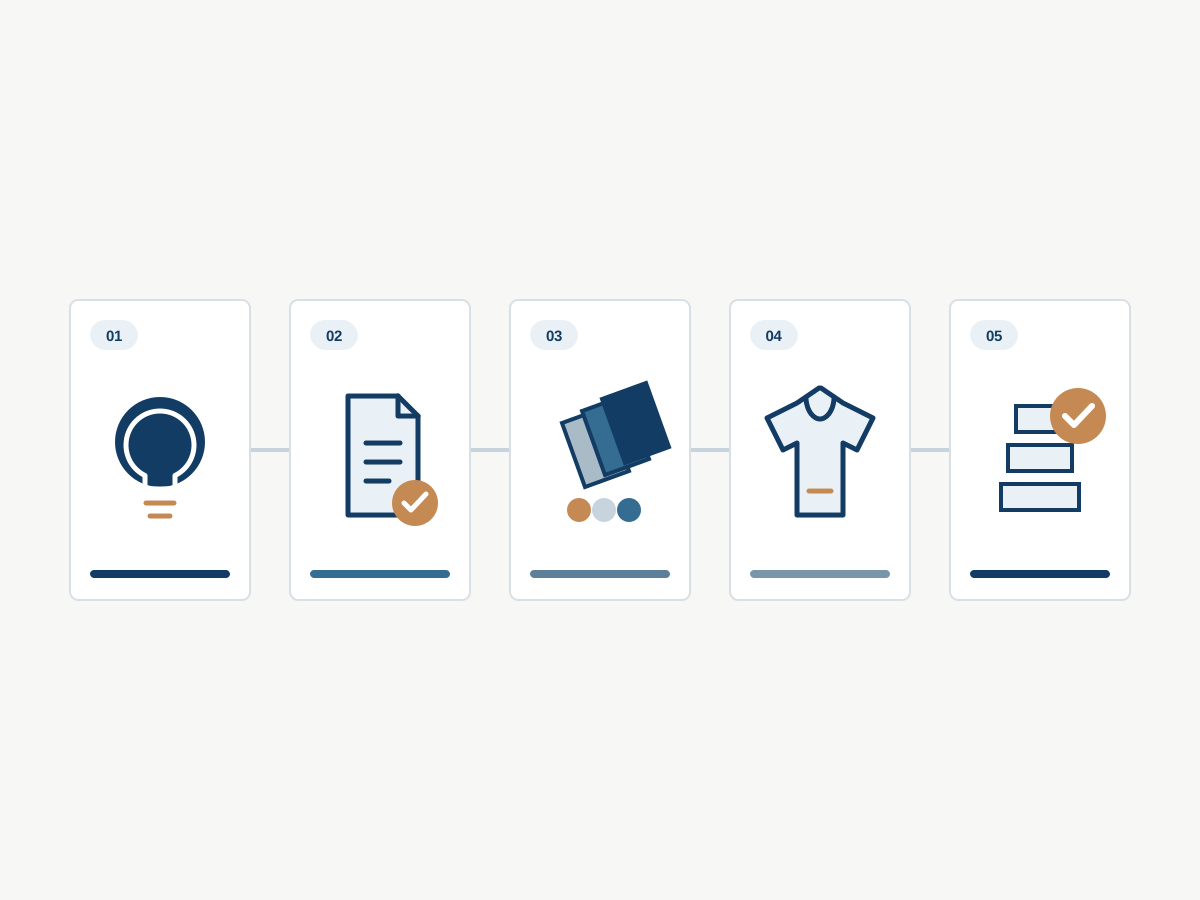
A disciplined development process may follow these steps:
- Initial brief review: Product category, quantities, target market and available technical documents are reviewed.
- Feasibility assessment: Materials, construction, supplier requirements and potential production constraints are discussed.
- Fabric and trim direction: Suitable material options and relevant swatches are evaluated.
- Preliminary costing: An initial price direction is prepared based on the available information.
- Development sample: A first sample is produced after the main technical and material details are sufficiently clear.
- Fit and revision: Measurements, construction and appearance are reviewed and corrected.
- Final confirmation: Price, quantity, materials, labeling, packaging and schedule are confirmed before bulk production.
This approach helps prevent the brand from spending heavily before the product and production conditions have been properly evaluated.
What Makes an Inquiry Credible?
A credible inquiry does not require a large order. It requires clarity and realistic expectations.
A useful first message should include:
- A short introduction to your company or planned brand
- Product category and number of styles
- Estimated quantity per style
- Target market
- Tech pack or reference images
- Material preferences
- Target price range, where possible
- Required delivery period
- Destination country
- Questions that need to be evaluated
Avoid sending a large collection of unrelated images with only a request for "your best price." Without quantities, materials, construction details and quality expectations, a meaningful quotation is rarely possible.
Preparation Protects Both Sides
Good preparation does not remove every production risk, but it makes those risks easier to identify and manage.
For the buyer, it helps create more useful quotations, fewer sample revisions and better control over the development budget. For the production partner, it reduces uncertainty and makes it possible to allocate sourcing, pattern and sampling resources appropriately.
The objective is not to arrive with every answer. It is to demonstrate that the project has a defined direction and that decisions can be made in an organized way.
Preparing Your First Production Brief
All In Denim supports international brands with product review, material and trim sourcing, sampling, costing, production follow-up, quality control and export coordination in Türkiye.
If you are preparing a new collection, you can contact us with your tech pack, reference sample, product images or initial production brief. We can review the available information and identify the details required for the next stage.
Send Your Production Brief
Related services
Continue from guidance to production planning.
Explore the All In Denim services most closely connected to this guide.
Manufacturing Capabilities
Review sourcing, sampling, production follow-up, quality control and export preparation support.
Product Categories
Explore denim, woven garments, knitwear, underwear, loungewear and private label categories.
Production Process
Follow the stages from technical review and sampling through bulk production and export coordination.
Ready to discuss your product?
Send your product brief, tech pack, reference images, estimated quantities, target market, and timeline for an initial production review.