
From Idea to First Production · Guide 4 / 6
From First Sample to Production Approval
Learn how proto, fit, size-set and pre-production samples help brands control fit, materials, revisions and approvals before bulk apparel production.
9 min read
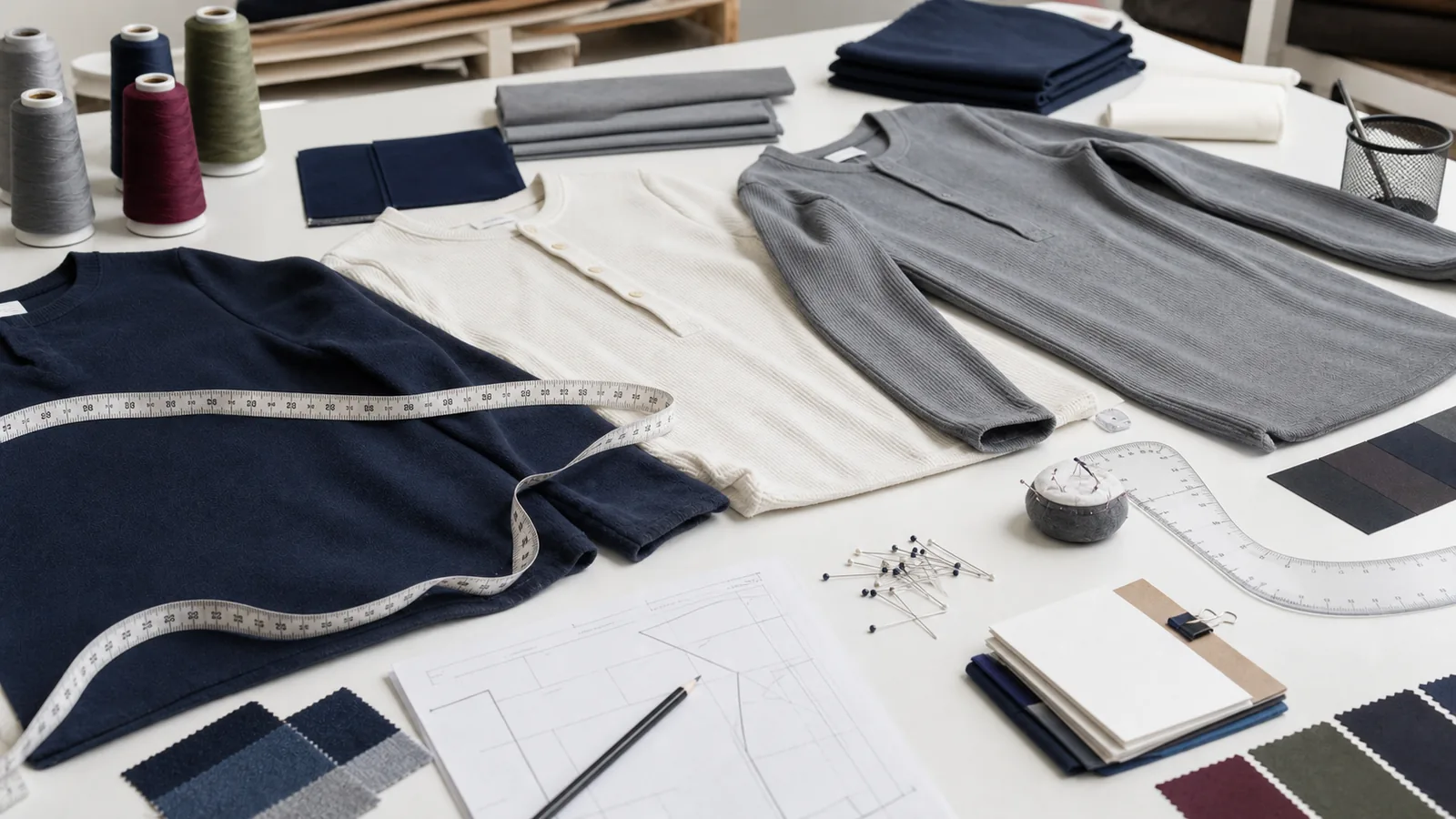
Sampling is where a design, a tech pack and selected materials are tested as a physical garment. It allows the buyer and production team to review fit, construction, measurements, fabric behaviour, trims, branding and finishing while changes are still manageable.
The purpose is not to order repeated samples until one simply looks acceptable. A controlled process gives each sample a specific job, records the result and updates the production documents before the next round.
Sample names and sequences vary between brands, product categories and manufacturers. A basic T-shirt may need fewer stages than tailored outerwear, technical activewear or a washed denim style. The parties should therefore agree what each requested sample is intended to prove rather than rely on the sample name alone.
Treat Sampling as a Series of Decisions
A useful sampling plan separates different questions:
- Can the design be constructed as intended?
- Does the base size have the correct balance, silhouette and movement?
- Do the measurements and grade rules work across the selected size range?
- Are final fabric, trims, colors, labels and artwork correctly represented?
- Is there a sufficiently clear approved standard for bulk production?
Trying to approve every point in the first sample often creates confusion. For example, a development sample made in substitute fabric may be useful for reviewing construction, but it cannot prove the final drape, shrinkage or color. Record what the sample can and cannot confirm.
Agree the Sample Roadmap Before Starting
Before the first sample is ordered, discuss the likely checkpoints for the style. The route depends on:
- Product complexity and construction
- Fit sensitivity and intended silhouette
- Number of sizes and grading risk
- Whether final materials are available
- Wash, print, embroidery or other finishing processes
- Labeling, packaging and destination-market requirements
- Testing or compliance needs
- Buyer approval procedures
- Launch date and development budget
Not every project requires every possible sample type. However, removing a checkpoint should be a conscious risk decision, not an attempt to save time without considering what remains untested.
Prepare Before Requesting the First Sample
Sampling becomes more useful when the starting information is controlled. Send the current version of:
- Technical drawings and construction details
- Base-size measurement chart with points of measurement
- Fit and silhouette direction
- Fabric and trim specification or approved references
- Color and artwork information
- Label and branding placement
- Sample size and quantity
- Required sample type and purpose
- Requested review or delivery date
- Known open questions
State whether a material or detail is final, provisional or open to an alternative. If substitute fabric is allowed, identify which decisions must wait until the final fabric is available.
Development or Proto Sample
The first development sample translates the technical information into a garment. Its main purpose is usually to review design interpretation, pattern direction, proportions and construction feasibility.
Depending on material availability, it may use substitute fabric or trims. That can be practical, but the substitution must be documented because fabric weight, stretch, recovery, surface and finishing can alter the fit and construction result.
Review points may include:
- Overall silhouette and proportion
- Neckline, collar, pocket and opening shapes
- Seam placement and construction method
- Ease of dressing and movement
- Compatibility between design details and production method
- Early measurement differences
- Details that need clarification in the tech pack
The first sample is often diagnostic. A clear list of what was learned is more valuable than a simple approved or rejected label.
Fit Sample
The fit sample focuses on balance, measurements, comfort, movement and the intended appearance on the body. Use the defined base size and evaluate it on the brand's approved fit model, dress form or another agreed reference.
Body measurements and garment measurements are not the same. The garment includes ease, design volume and allowances appropriate to the material and intended use. Consistent points of measurement are therefore essential when comparing the sample with the specification.
During the fitting, review:
- Shoulder, chest, waist and hip balance
- Garment and sleeve length
- Armhole, rise, crotch or seat where relevant
- Ease, mobility and comfort
- Symmetry and hang
- Seam position and stress points
- Fabric stretch, recovery and drape
- Appearance after fastening, sitting or movement
Photographs should support written comments, not replace them.
Write Comments the Pattern and Sample Teams Can Use
Comments such as “too loose” or “the sleeve looks wrong” leave room for different interpretations. Connect each issue to a location, measurement or visible construction point.
A practical comment record includes:
- Style code, sample stage, sample size and date
- Tech pack version used to make the sample
- Photograph or sketch showing the location
- Current measurement and requested measurement where applicable
- Clear description of the required change
- Pattern or construction note when known
- Status: approved, revise, pending or reference only
- Person responsible for the decision
For example, “reduce sleeve length by 2 cm measured from shoulder point; keep cuff depth unchanged” is easier to apply and verify than “shorten the sleeve.”
Issue one consolidated comment file for each round. Conflicting notes across messaging apps, email chains and marked photographs make it difficult to identify the current instruction.
Control Changes Between Sample Rounds
Every approved change should be reflected in the current tech pack, measurement chart, bill of materials, artwork file or pattern instruction. Use version numbers and dates.
When the next sample arrives, first confirm that the requested corrections were applied. Then evaluate any new effects created by those changes. Adjusting shoulder width, fabric quality or wash treatment can influence several other measurements and the way the garment hangs.
Avoid introducing unrelated design changes late in the process. A new pocket, zipper, fabric or artwork after fit approval may require costing, pattern and material approvals to be reopened.
Review Final Materials on the Garment
A fabric swatch approval does not prove how the finished garment will fit or behave. Final or production-representative material should be reviewed in garment form before bulk where it can materially affect the result.
Check:
- Drape, stretch and recovery
- Shrinkage and appearance after the required care or wash process
- Seam appearance, puckering or slippage risk
- Opacity, lining and reinforcement
- Color matching between main fabric, rib, thread and trims
- Print, embroidery, wash and embellishment placement
- Label comfort and attachment
- Hardware function and compatibility
If final materials are unavailable during an early round, keep those approvals open rather than treating them as complete.
Size Set and Grading Review
Once the base fit and pattern are stable, grading develops the additional sizes. A size set checks whether the agreed proportions and measurement increments work across the range.
The buyer and production team should agree which sizes need physical samples. Depending on the range and risk, this may include the smallest, base and largest sizes rather than every size and color.
Review more than the measurement table. Look at pocket and artwork scale, collar and cuff proportions, rise and body length, elastic behaviour, opening size and ease of movement. A mathematically graded pattern can still need adjustment at the ends of the size range.
Record any size-specific correction separately so the approved base size is not changed unintentionally.
Pre-Production Sample
The pre-production sample, often called a PP sample, is intended to represent the agreed production standard before bulk begins. Its exact definition should be written into the order or approval procedure.
Where applicable, it should use:
- Approved final fabric and color
- Approved trims and hardware
- Current pattern and measurement specification
- Final construction and seam details
- Approved print, embroidery, wash or finish
- Correct labels and branding
- Agreed pressing, folding and packaging direction
Compare it against the latest approved documents, not against memory or an earlier email. Any exception must be recorded with its owner and resolution date.
Approval should identify the physical sample, document version, date and person giving approval. Keep a controlled reference available to the buyer and production team where practical.
Approval Does Not Replace Production Control
An approved sample defines intent; it does not guarantee that every bulk unit will match automatically. Materials, machines, operators, washing and production conditions can introduce variation.
Bulk control may therefore include material inspection, pre-production meetings, first output or top-of-production review, inline inspection, measurement checks, testing and final inspection according to the product and buyer requirements.
The approved sample, current specifications and documented tolerances should remain the reference during these checks.
Plan Sampling Time and Cost Realistically
Sampling uses pattern, technical, material, sample-room and communication resources. Costs may include pattern development, sample making, custom fabric or trim development, printing, embroidery, washing, testing and courier charges.
The number of rounds cannot be promised before the product has been reviewed. Complexity, unclear information, changing materials and slow approvals can all extend the process.
To control time and cost:
- Start with a focused range of styles
- Confirm who has authority to approve
- Consolidate comments by an agreed deadline
- Separate necessary corrections from optional design changes
- Update documents after every decision
- Approve physical materials early where possible
- Keep a sample and revision tracker
- Do not book a bulk date based only on an unapproved first sample
Common Sampling Problems
Watch for:
- Requesting a sample before basic specifications are ready
- Expecting substitute material to prove final fit and performance
- Changing several unrelated details in every round
- Sending subjective or conflicting comments
- Failing to identify the tech pack version
- Approving fit without checking measurements and movement
- Grading before the base pattern is stable
- Skipping physical review of important edge sizes
- Approving colors or artwork only on screen
- Treating a PP sample as complete while final labels or trims are missing
- Giving approval through an informal message without a record
- Starting bulk while open issues remain
Production Approval Checklist
Before authorizing bulk production, confirm:
- The intended sample stages have been completed or consciously waived
- Fit, construction and base measurements are approved
- Grade rules and required size-set samples are approved
- Final fabric, trims, colors and finishes are approved
- Artwork, placement and branding files are current
- Labels, care information and packaging direction are confirmed
- Testing and compliance requirements are identified
- The latest tech pack and BOM match the approved sample
- Tolerances and quality checkpoints are documented
- Open issues, exceptions and responsibilities are recorded
- Approval identifies the sample, date and document version
If important points remain open, issue a conditional status rather than a general approval that can be misunderstood.
Discuss Sampling Before Committing to Bulk
All In Denim can review product briefs, tech packs, material status, target quantities and timelines while planning an appropriate sampling and production route in Türkiye.
Sample stages, costs, timing and approval requirements depend on the product, materials, processes, buyer procedures and selected production setup. A clear initial review helps define what should be tested before bulk production begins.
Discuss Your Sampling Requirements
References
Related services
Related Manufacturing Services
Explore the All In Denim services most closely connected to this guide.
Production Process
Follow the stages from technical review and sampling through bulk production and export coordination.
Quality Control & Compliance
See how approvals, measurements, inspections, packaging and documentation are coordinated.
Manufacturing Capabilities
Review sourcing, sampling, production follow-up, quality control and export preparation support.
Ready to discuss your product?
Send your product brief, tech pack, reference images, estimated quantities, target market, and timeline for an initial production review.