

From Idea to First Production · Guide 3 / 6
Choosing Fabrics, Trims and Colors Before Sampling
Learn how to select apparel fabrics, trims and colors before sampling, including composition, weight, stretch, testing, stock options and physical approvals.
8 min read
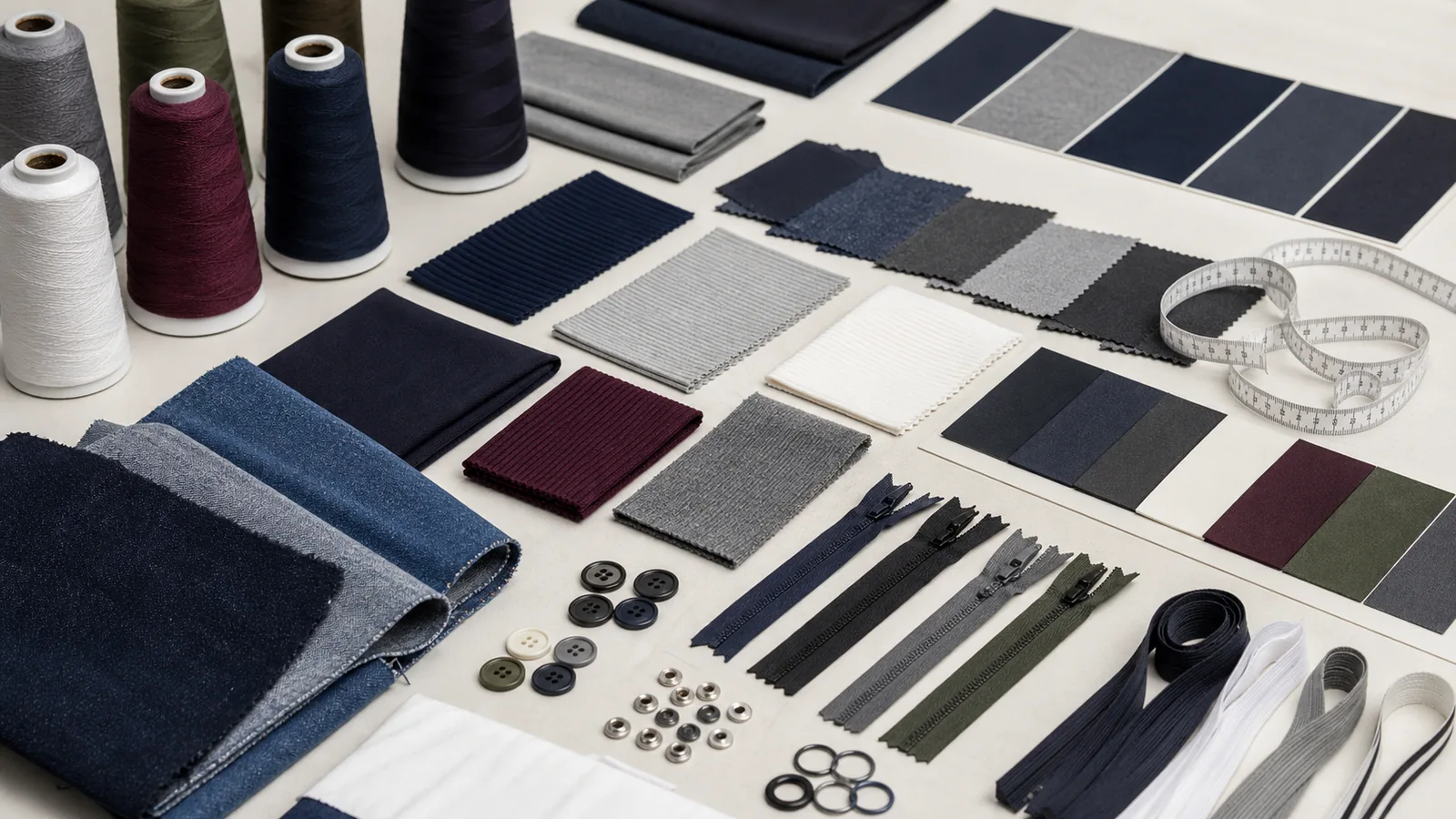
Materials determine far more than the appearance of a garment. They influence fit, comfort, durability, care, cost, minimum quantities, lead time and whether a design can be produced consistently.
For an emerging brand, the aim is not to know every textile term before contacting a manufacturer. The aim is to describe the product clearly enough to compare suitable options and make controlled decisions before spending money on repeated samples.
A practical material brief connects the intended garment, target customer, price direction, quantity, destination market and required performance. Fabric, trims and colors should then be reviewed as one system rather than as isolated choices.
Begin With the Product, Not a Fabric Name
Terms such as cotton, jersey, denim or satin are too broad to define a production material.
Before sourcing, describe how the finished product should behave:
- Product category and silhouette
- Intended season and climate
- Desired hand feel and visual surface
- Required structure, drape or compression
- Opacity and lining needs
- Stretch and recovery expectations
- Care method and expected use
- Target retail and production price direction
- Estimated quantity by color
- Destination market
A relaxed summer T-shirt, a fitted rib top and a heavyweight sweatshirt may all contain cotton, yet require very different yarns, constructions, weights and finishes.
Understand the Main Fabric Variables
Composition is important, but it does not describe the whole fabric. Record the following information where available.
Fibre composition
Composition affects comfort, performance, care, claims and labeling. Cotton, viscose, polyester, polyamide, wool, linen and elastane each behave differently, while blends are often used to balance cost, strength, softness, stretch or stability.
Do not make organic, recycled or other material claims without traceable documentation appropriate to the supply chain and buyer requirement.
Fabric construction
Construction describes how fibres and yarns become fabric. Typical apparel constructions include single jersey, interlock, rib, fleece, pique, twill, poplin, canvas and denim.
Two fabrics with the same composition and similar weight can perform differently because their yarn, knitting or weaving structure and finish are different.
Weight and width
Fabric weight is often expressed in GSM, while usable width affects consumption and costing. Weight can guide sourcing, but it does not replace a physical review. A compact 200 GSM jersey may feel and drape differently from a loosely constructed 200 GSM jersey.
Stretch and recovery
Stretch describes how far the fabric extends. Recovery describes how well it returns to its original dimensions. Both matter for fitted garments, waistbands, activewear, underwear and products with shape retention requirements.
Finish and surface
Brushing, compacting, peaching, coating, washing, mercerizing and other treatments can change softness, appearance, shrinkage and performance. State the result you need and identify any finish that is essential to the design.
Use Reference Samples Carefully
A reference garment or swatch can communicate weight, touch, drape, stretch, color and finish more effectively than adjectives alone.
However, a reference should be treated as direction unless the exact supplier and quality are known. Ask the sourcing team to record how the proposed option differs from the reference.
Useful reference notes include:
- What must be matched closely
- What can change
- Whether composition is known
- Whether the reference has been washed or worn
- Which side is the face of the fabric
- Whether color, feel, weight or performance is the main priority
Do not send a reference product without explaining what you want to learn from it.
Stock Fabric or Custom Development?
Stock-supported materials can be a practical starting point for lower quantities because the fabric has already been produced or is regularly available. They may offer faster access and lower fabric minimums, but color and specification choices are limited.
Custom fabric or color development offers more control but may require higher mill minimums, development charges and longer lead times.
Before requesting a custom option, ask:
- Is a close stock alternative acceptable?
- What is the minimum for the fabric and each custom color?
- Can excess fabric be held for repeat production?
- Is the quality repeatable in later seasons?
- What approvals and testing are included?
- How does the material minimum affect the garment MOQ?
The smallest garment order is not always the smallest commercially possible material order.
Build a Trim List Early
Trims affect both function and brand identity. Include every component in the bill of materials, even when sourcing is still open.
Typical trims include:
- Sewing and topstitching thread
- Zippers, buttons, snaps and hooks
- Elastic, rib and drawcord
- Interlining and reinforcement materials
- Main, size, care and composition labels
- Patches, badges and decorative hardware
- Hangtags, barcodes and packaging
For each trim, identify material, size, color, finish, placement, branding and approval status where relevant.
A zipper should be considered together with garment weight, opening length, wash process and end use. Elastic should be reviewed for width, extension, recovery, softness and behavior after care. Metal finishes should be checked against washing and destination-market requirements.
Control Color With Physical References
Screen colors are not reliable production standards. Displays, lighting and fabric composition all change how a color appears.
For fashion and textiles, use an appropriate textile color system rather than a graphics reference. Pantone distinguishes its Fashion, Home + Interiors system for textiles from its graphics systems.
A clear color record should include:
- Color name and recognized reference
- Material or component to which it applies
- Physical swatch, lab dip or sample status
- Light source or viewing condition where relevant
- Approved date and approver
- Acceptable tolerance or buyer standard where defined
The same color reference may look different on cotton, polyester, nylon, metal and plastic. Main fabric, rib, lining, thread, zipper tape and labels should therefore be reviewed together when color matching matters.
Approve Materials in Small, Controlled Steps
Before commissioning a full garment sample, a lower-cost approval sequence can reduce uncertainty:
- Share the material brief and reference samples.
- Review available fabric and trim options digitally for direction.
- Request physical swatches or a small material presentation.
- Compare hand feel, weight, surface, stretch and color.
- Confirm which options are approved, rejected or pending.
- Request lab dips or custom developments only where needed.
- Record approved supplier references in the tech pack and BOM.
- Use the approved materials for the development sample.
This sequence does not eliminate sampling. It makes the sample more meaningful because fewer basic material questions remain open.
Plan Testing According to Risk
Testing should reflect the product, fibre composition, finish, target market and buyer requirements. Depending on the garment, relevant checks may include:
- Fibre composition
- Fabric weight and usable width
- Dimensional stability and shrinkage
- Colorfastness to washing, rubbing or perspiration
- Pilling and abrasion
- Stretch and recovery
- Seam behavior
- Appearance after care
- Restricted-substance or product-specific requirements
Testing needs should be discussed before bulk production. A test result belongs to the tested material or product under defined conditions; it should not be treated as a general claim for every future order.
Connect Materials to Labeling and Destination Market
Accurate material information is needed for care and composition labels.
EU textile products marketed to consumers generally need fibre-composition labeling using recognized fibre names, with required information presented in the official language or languages of the country of sale. In the United States, most textile and wool products require information such as fibre content, country of origin and the identity of the responsible business; care instructions are also regulated for covered apparel.
Confirm final wording and compliance requirements for the specific product and destination market rather than copying a label from another garment.
Common Material Selection Problems
Check for these issues before sampling:
- Selecting fabric only by composition
- Using subjective terms without a physical reference
- Choosing a fabric before defining silhouette and use
- Ignoring shrinkage, recovery or care behavior
- Requesting custom colors without checking mill minimums
- Approving colors only from a screen image
- Treating a graphics color code as a textile standard
- Sourcing trims after the garment sample is made
- Forgetting lining, interlining, labels or packaging in the BOM
- Making material claims without documentation
- Assuming a fabric will remain available indefinitely
- Failing to record supplier article and approval status
A Practical Material Brief
For each style, prepare:
- Product description and technical flat
- Target hand feel, weight and appearance
- Preferred composition and acceptable alternatives
- Required construction and stretch
- Colorways and physical references
- Estimated quantity by color
- Essential finishes or performance requirements
- Complete trim direction
- Branding, labels and packaging requirements
- Target market and care expectations
- Target price range where available
- Open questions for the sourcing team
Mark each decision as confirmed, alternative allowed, to be sourced or pending approval.
Final Check Before Sampling
Ask:
- Does the material suit the garment silhouette and intended use?
- Is the proposed fabric identified by supplier reference and specification?
- Are weight, construction, stretch and finish understood?
- Have physical swatches been reviewed?
- Are colors connected to both a reference and a material?
- Are all trims included in the BOM?
- Do trim finishes work with the fabric and wash process?
- Are material minimums compatible with the planned order?
- Are testing and destination-market requirements identified?
- Is every approval recorded in the current tech pack?
If these answers are clear, the first garment sample has a much better chance of answering fit and construction questions instead of repeating basic sourcing decisions.
Discuss Materials Before the First Sample
All In Denim can review material briefs, reference garments, fabric directions, trim requirements and colorways while evaluating sourcing and production options in Türkiye.
Material availability, minimums, lead times, testing and documentation depend on the selected quality, supplier, product and buyer requirements. Early review helps identify those conditions before sampling and costing advance too far.
Discuss Your Material Requirements
References
Related services
Continue from guidance to production planning.
Explore the All In Denim services most closely connected to this guide.
Product Categories
Explore denim, woven garments, knitwear, underwear, loungewear and private label categories.
Materials and Production Coordination
Review how fabrics, trims, supplier options and production requirements are coordinated in Turkey.
Manufacturing Capabilities
Review sourcing, sampling, production follow-up, quality control and export preparation support.
Ready to discuss your product?
Send your product brief, tech pack, reference images, estimated quantities, target market, and timeline for an initial production review.